
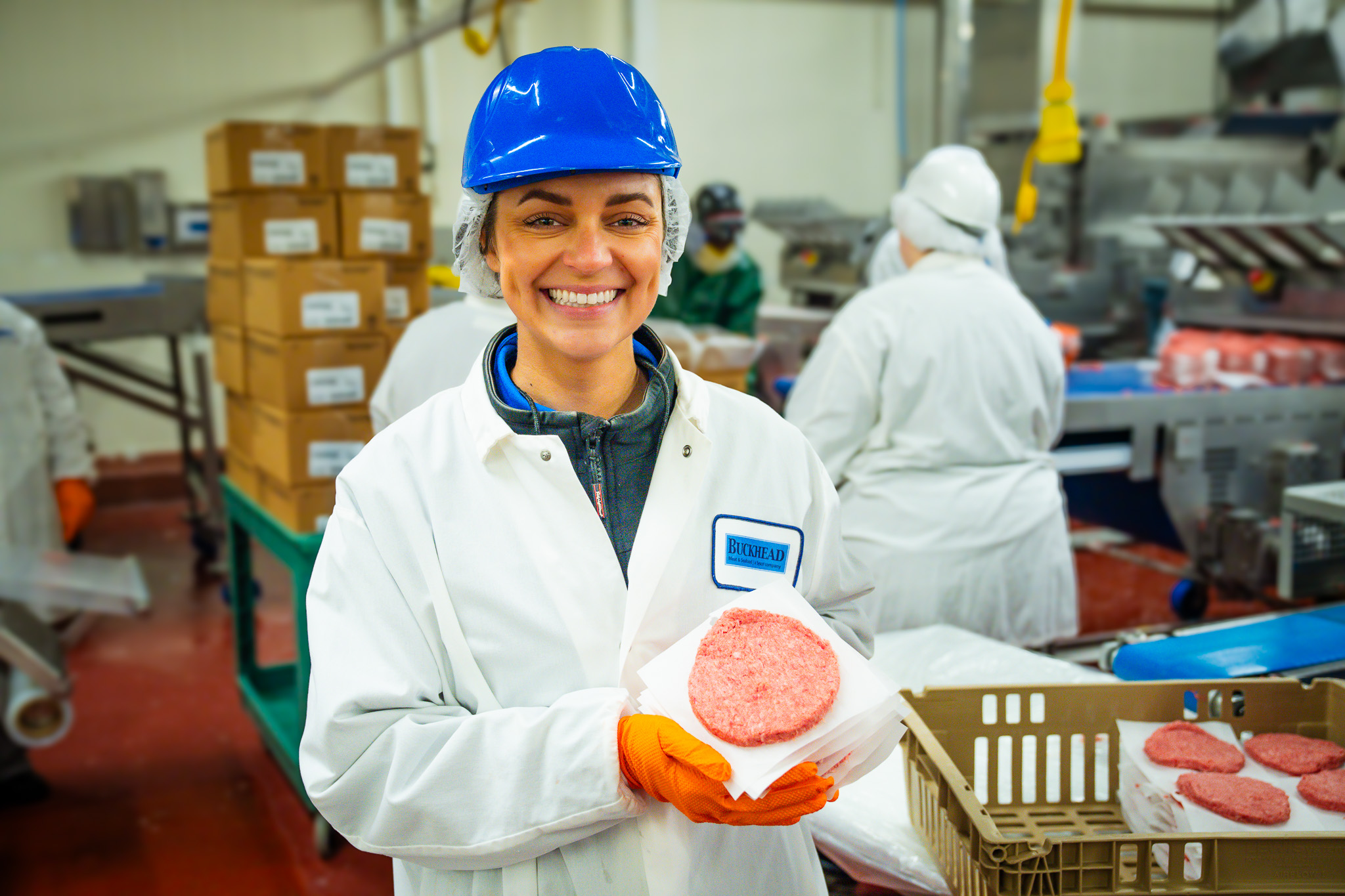
Ground beef labels are important since ground beef is the most widely consumed beef item in the United States. Sought after for its value and versatility, ground beef is the work horse beef product for retail and foodservice alike. But there are many aspects of its production that are not well understood.
Have you ever wondered what goes on behind the scenes of ground beef labels? What about the processes used to actually produce ground beef? Are you confident when choosing among varieties of ground beef? All of these and more will be covered in this article about all things ground beef.
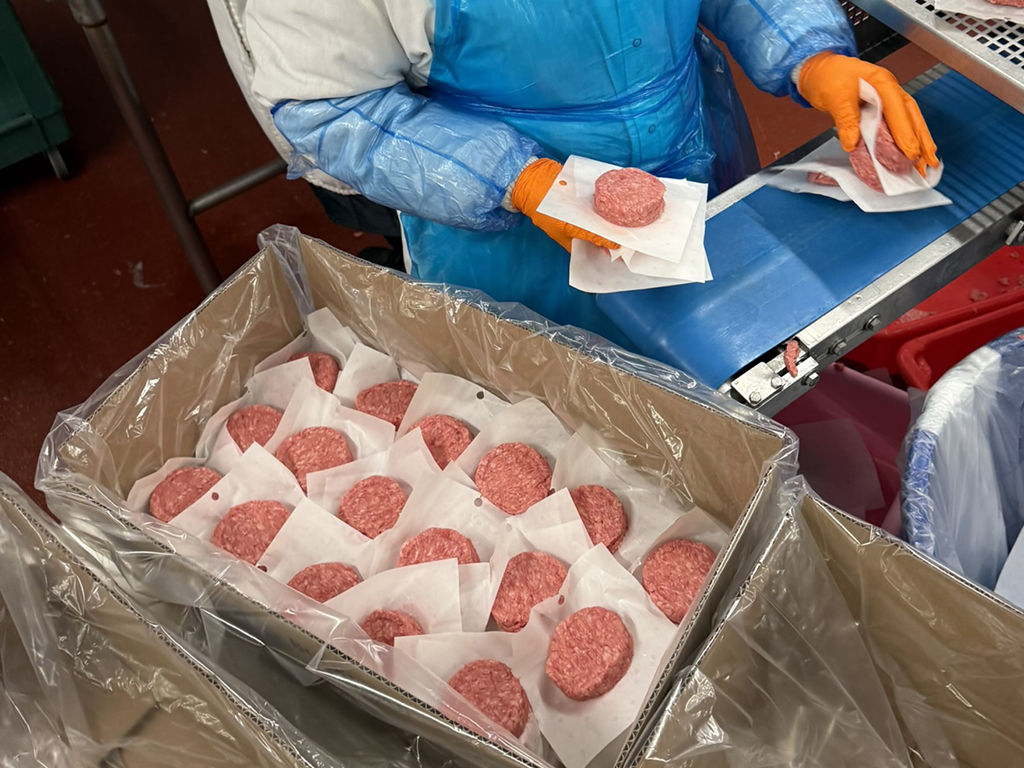
Fresh burger patties being prepared at one of our Buckhead | Newport facilities.
It Can Become Confusing Fast!
It’s no secret that everyone loves a good burger they are the ultimate comfort food, but how often do you think about the meaning behind the names and numbers?
We see them on retail packages and menus alike, 80/20, Ground Round, Chuck Brisket Short Rib Blend – it can become confusing fast. Which one should you use?
Ground Beef Labels are Important—and it’s the Law
The labeling and naming of ground beef products is more complex than most realize. The United States Department of Agriculture (USDA) governs the ‘standard of identity’ for many food products through their Food Safety and Inspection Service department and That includes all ground beef.
They say, “ ’Chopped Beef’ or ‘Ground Beef’ shall consist of chopped fresh and/or frozen beef with or without seasoning and without the addition of beef fat as such, shall not contain more than 30 percent fat, and shall not contain added water, phosphates, binders, or extenders.
When beef cheek meat (trimmed beef cheeks) is used in the preparation of chopped or ground beef, the amount of such cheek meat shall be limited to 25 percent; and if in excess of natural proportions, its presence shall be declared on the label, in the ingredient statement Beyond legal standards for labeling and naming”.

Ground Beef Labels are important—it’ the law, and all Buckhead Pride products are labeled properly.
If This Sounds Like Pretty Serious Stuff, That’s Because It Is!
This definition and all other food definitions are part of the Code of Federal Regulations and labeling products without adhering to these strict definitions has legal consequences.
When you break that definition down it states that:
- Ground beef does not have any added ingredients
- Fat percentage cannot exceed 30%, and
- If beef cheek meat is to make up more than 25% of the grind by composition, it must be declared on the label.
The consumer has the right to know what is in their beef products, so labels are required to include added ingredients and be very transparent.
What Does the Rest of the Ground Beef Label Mean?
So, now that you understand what it takes to be called ground beef, what does all the other stuff on the label mean? On a label there are often other accompanying words like ‘Chuck’, ‘Round’, ‘80/20’, ‘75/25’ displayed ahead of ‘ground beef’.
These are simply descriptors to help you understand how the ground beef was produced and what to expect when cooking or eating it. When a subprimal, such as ‘Chuck’ or ‘Round’, is stated on the label that tells the consumer that all the beef used to make that product came from that specific area of the animal.
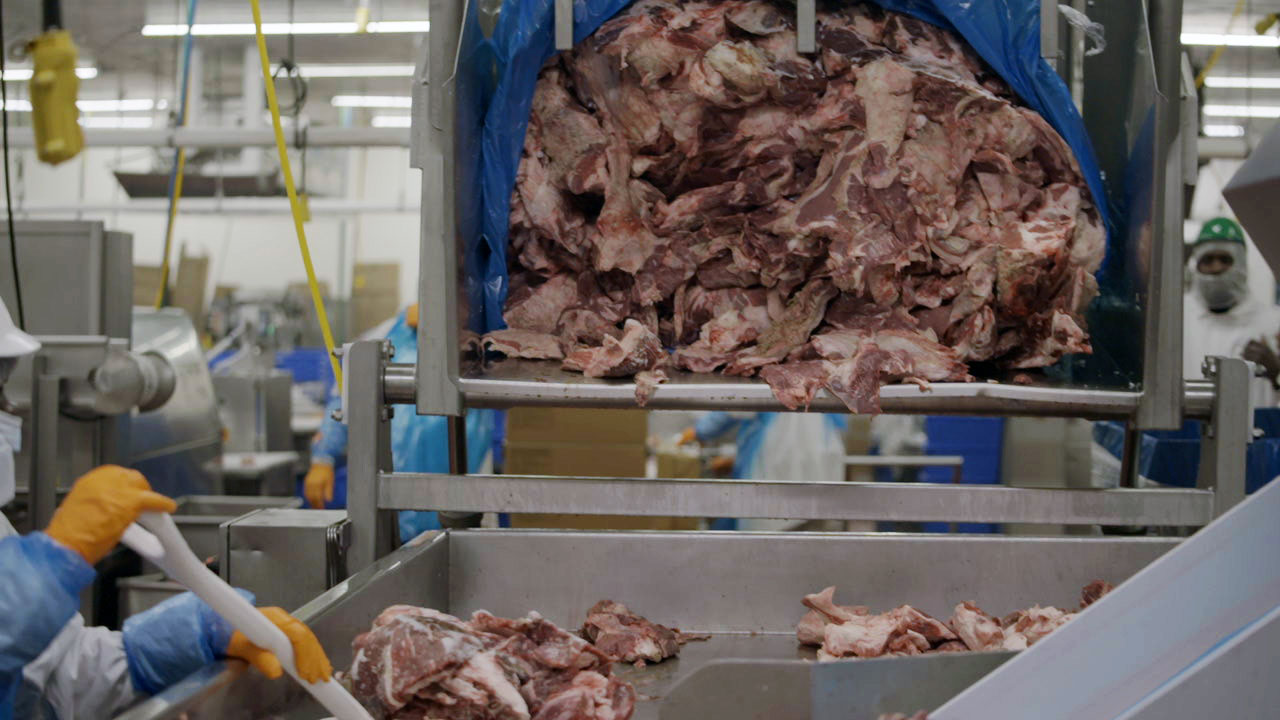
The consumer has a right to know which cuts of raw meat go into their ground beef for burgers.
Everyone Has a Preference
As consumers we often have preferences for specific ground beef blends, I tend to prefer the rich beefy flavor profile of a ground Chuck, while others may prefer the lean nature of Ground Round.
Whatever your personal preference, you can be certain that ‘Ground Chuck’ was made with beef from the Chuck and ‘Ground Round’ was made with beef from the Round.
Sometimes we produce ground beef as a blend, meaning we mix subprimals. So, ‘Chuck, Brisket, Short Rib’ blends would contain beef from each of those subprimals.
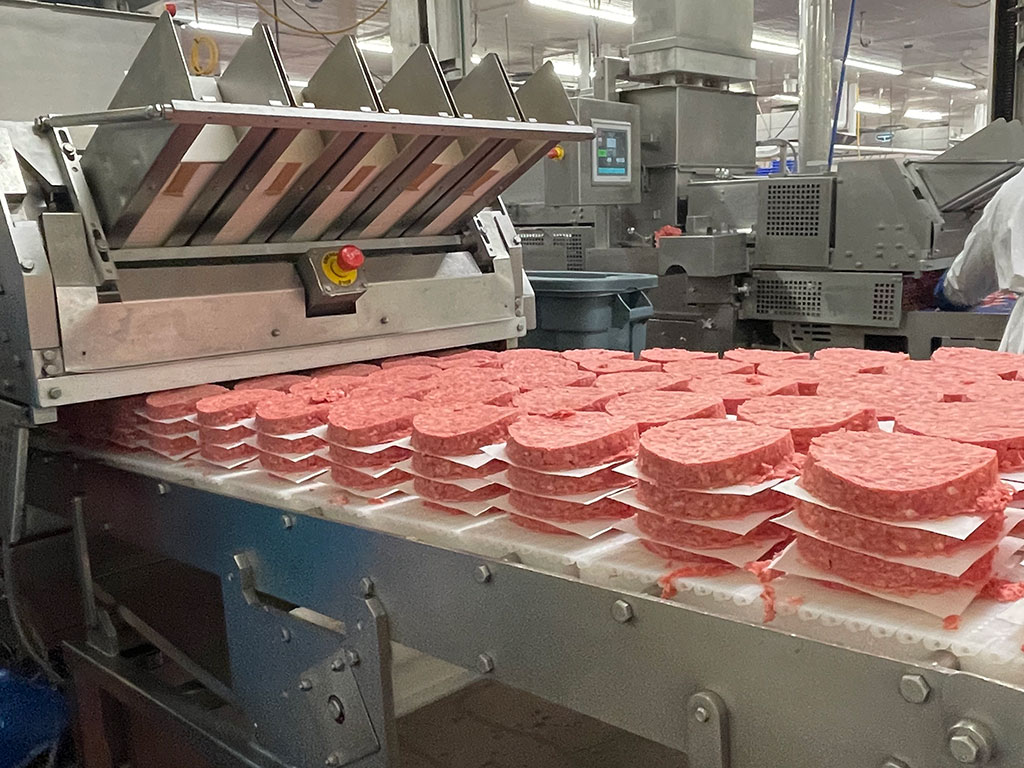
Whatever your personal preference, you can be certain that ‘Ground Chuck’ was made with beef from the Chuck and ‘Ground Round’ was made with beef from the Round.
Just the Beef—on Ground Beef Labels, that is…
Product labeled simply as ‘Ground Beef’ on the other hand, can be made with beef from any subprimal or part of the animal. The numbers that you see on ground beef labels such as ‘80/20’ or ‘75/25’ is a lean-to-fat ratio. When you see ‘80/20’, that is ground beef that is 80% lean and 20% fat by composition. In some cases, we only put a subprimal descriptor on the label, in other cases, we only put a lean-to-fat descriptor, but occasionally we put both on the same label.
Truth In Labeling Ground Beef
Regardless of how many descriptors are on the label they must be accurate, because in addition to enforcing the definition of ‘ground beef’, the USDA also oversees truth in labeling. What this means is that we are required by law to accurately label the beef products we produce.
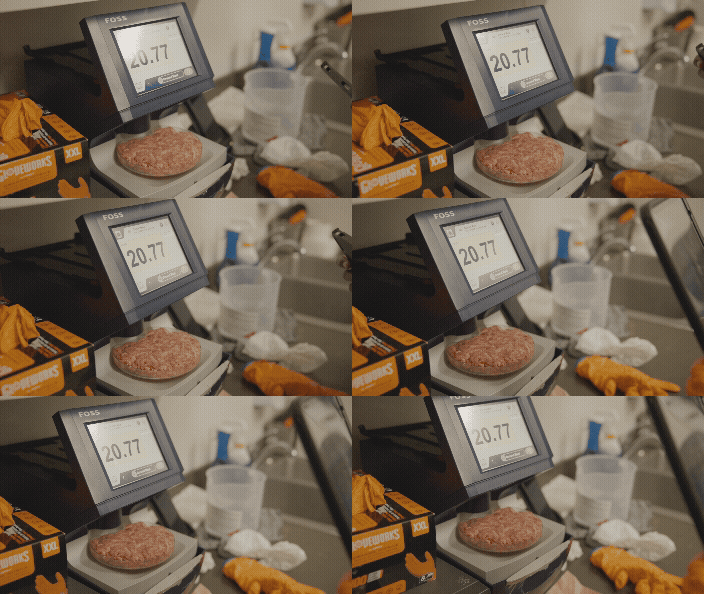
There is equipment to analyze beef samples, which tells us information about the fat composition
For example, ground beef labels which say ‘80/20’ must actually be 80% lean and 20% fat. Facilities that make ground beef often own equipment that can analyze a sample of raw ground beef and tell the exact lean point in a matter of minutes.
These tests will be run with each batch of ground beef being produced and documented through the facility’s internal food safety and quality assurance department.
Ground Beef Labels Have a Threshold of Tolerance
Not every batch of 80/20 ground beef will be 80% lean and 20% fat, so the USDA has created an acceptable threshold to be followed. For product that will not have a lean-to-fat descriptor on the label, the ground beef can have any lean to fat ratio as long as it follows the definition and does not exceed 30% fat.
Another example of this is labeling product as ‘ground chuck’. ‘Ground Chuck’ is not legally allowed to contain beef from the round as it was not labeled as such. To reiterate, it is acceptable to mix beef from the Chuck and Round, it would just need to be labeled truthfully. Calling this product ‘Chuck and Round Blend’ implies that it is a mix of both subprimals or ‘Ground Beef’ which does not imply a specific subprimal.
A Common Misconception with Ground Beef Labels
There is a common misconception that some ground beef is made from items such as beef tongue and other similar variety meats, or that some ground beef is unwholesome.
This is not true.
It’s very important to note that the description on a label is for marketing purposes and is not an indicator of safety or wholesomeness in any way. All beef that is produced to be sold for consumption, including ground beef, is inspected by the USDA Food Safety Inspection Service before being distributed.
There are differences in perceived quality and price of product based on the raw material used to produce it, think about ground Wagyu versus ground 80/20, but both are equally safe to consume.

When buying your ground beef from a supplier, you have a few things to consider.
Buying Ground Beef from a Wholesale Meat Supplier
We have grinding facilities across North America that produce fresh, locally sourced beef patties and specialty blends designed for quality, consistency, taste, and performance.
We control our entire process—and that means we manage all areas from sourcing to production, to delivery—ensuring that you get consistent quality, food safety, and full traceability every step of the way.
We also test and analyze the fat content, which affects the performance of our burgers for consistancy and quality.
Food safety is at the core of everything we do. Each facility has a USDA inspector on-site and is supported by our in-house FSQA teams. All of our grinding material we deliver to you has been tested for E. coli and comes with a Certificate of Analysis, offering peace of mind and a higher standard than the industry norm.
When it comes to fresh, raw ground beef patties and blends, Buckhead & Newport Meat and Seafood delivers you high-quality ground beef products that you can count on.
Talk with us today to learn more about a grinds and blends program we can put together for you.
Article written by Kylie Philipps. She has been in the foodservice industry since 2017 and holds both a Bachelor of Science and a Master of Science in Animal Science, with a research focus in Meat Science. After talking to her, you will definitely walk away with more interesting meat knowledge than you started with!
Additional contributions by Lisa Brizard. She has been in the foodservice industry since 1995 and leverages her culinary experience with all things content marketing.
Follow Buckhead Meat and Seafood on Facebook, Instagram, and LinkedIn.
Contact your Sales Consultant about placing your next order. If you are not a customer, find out how to become one today!